01
Pieces in the formula
Top, bottom, outer layer, shoes and one quiet detail are separated so each piece can be swapped on its own.
Outfit formula archive
The detail layer under Scene Archive: one look, broken into pieces, proportions, swaps and reasons — every outfit formula on this page is a closed system you can copy or adapt.
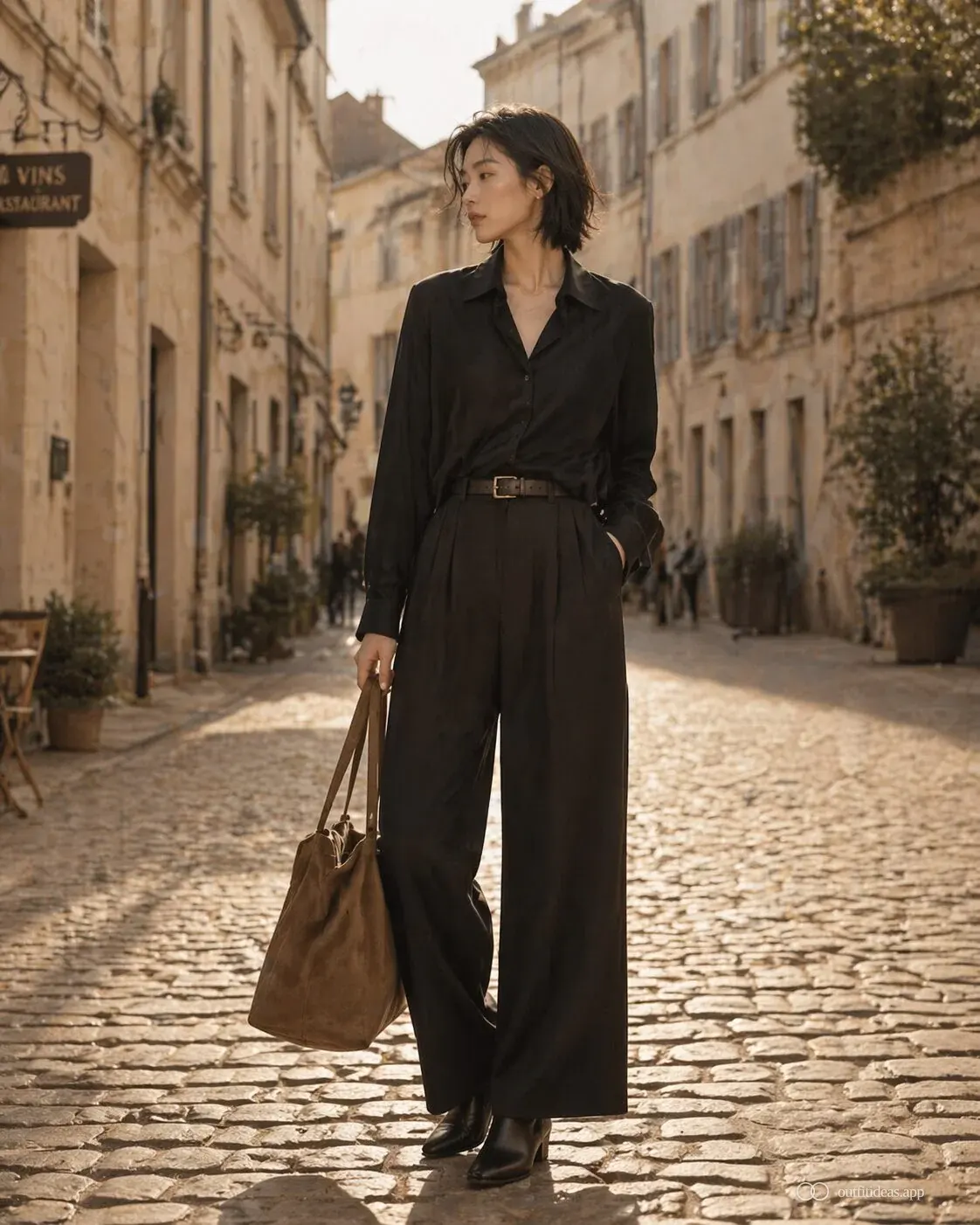
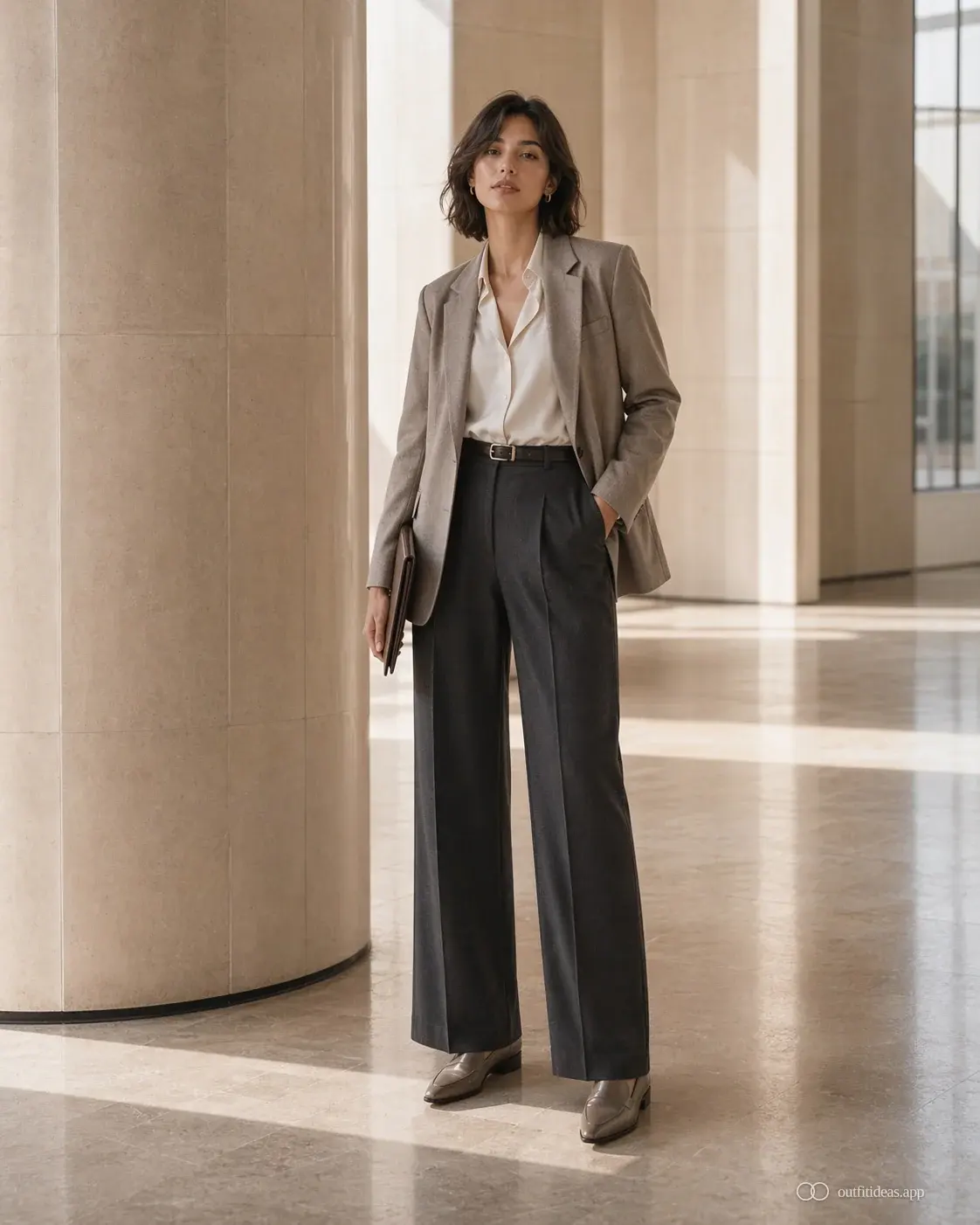 Pear shape outfitwide-leg pantsoffice outfitPear shape wide-leg pants office outfitA quiet-luxury work look for anyone who wants wide-leg pants to feel sharp, long, and intentional instead of heavy at the hip.
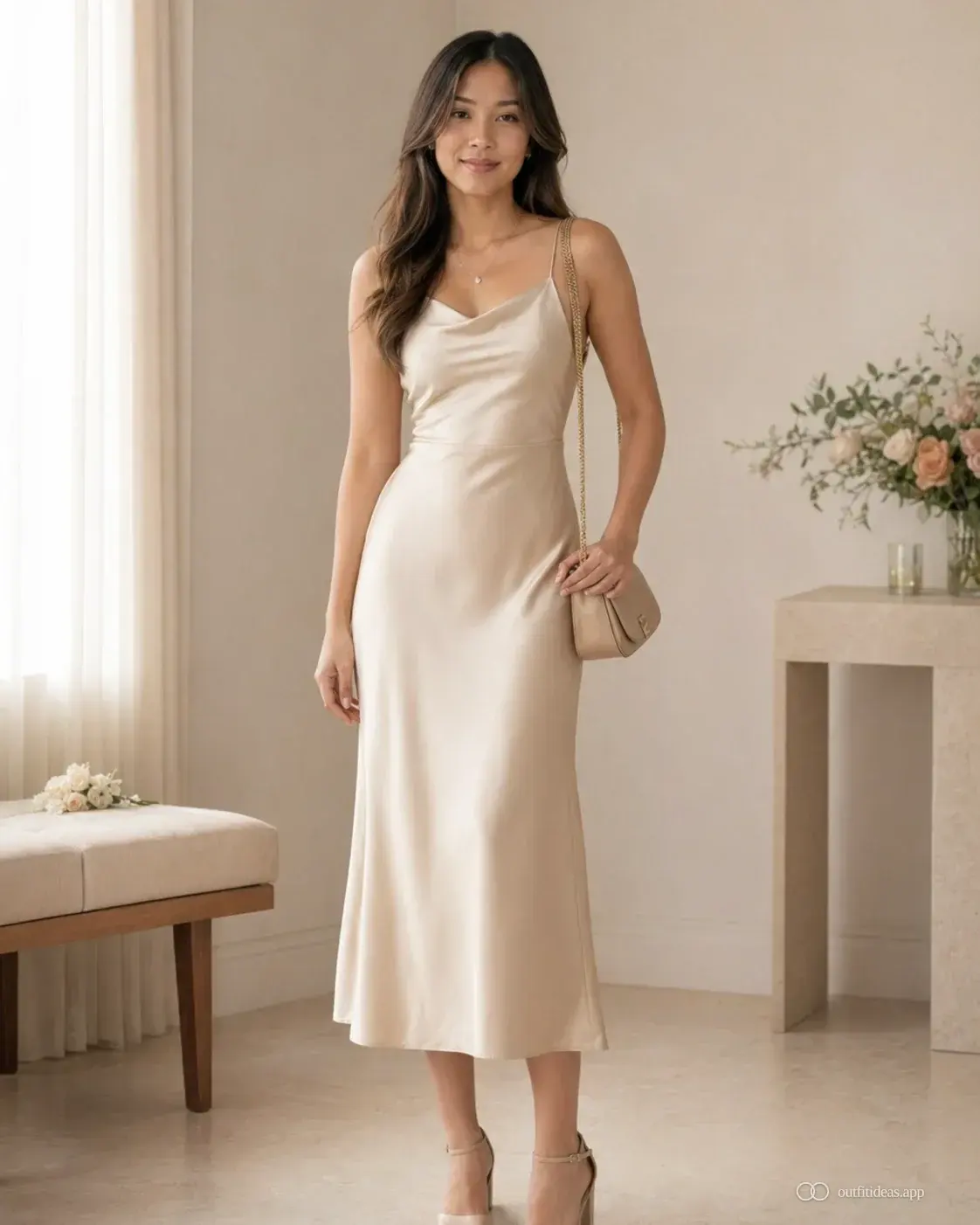 PetiteWedding guestMidi dressPetite wedding guest outfit in a satin midiA clean vertical dress line, a block heel and one piece of jewelry — sized for shorter frames so the silhouette never breaks into two halves.
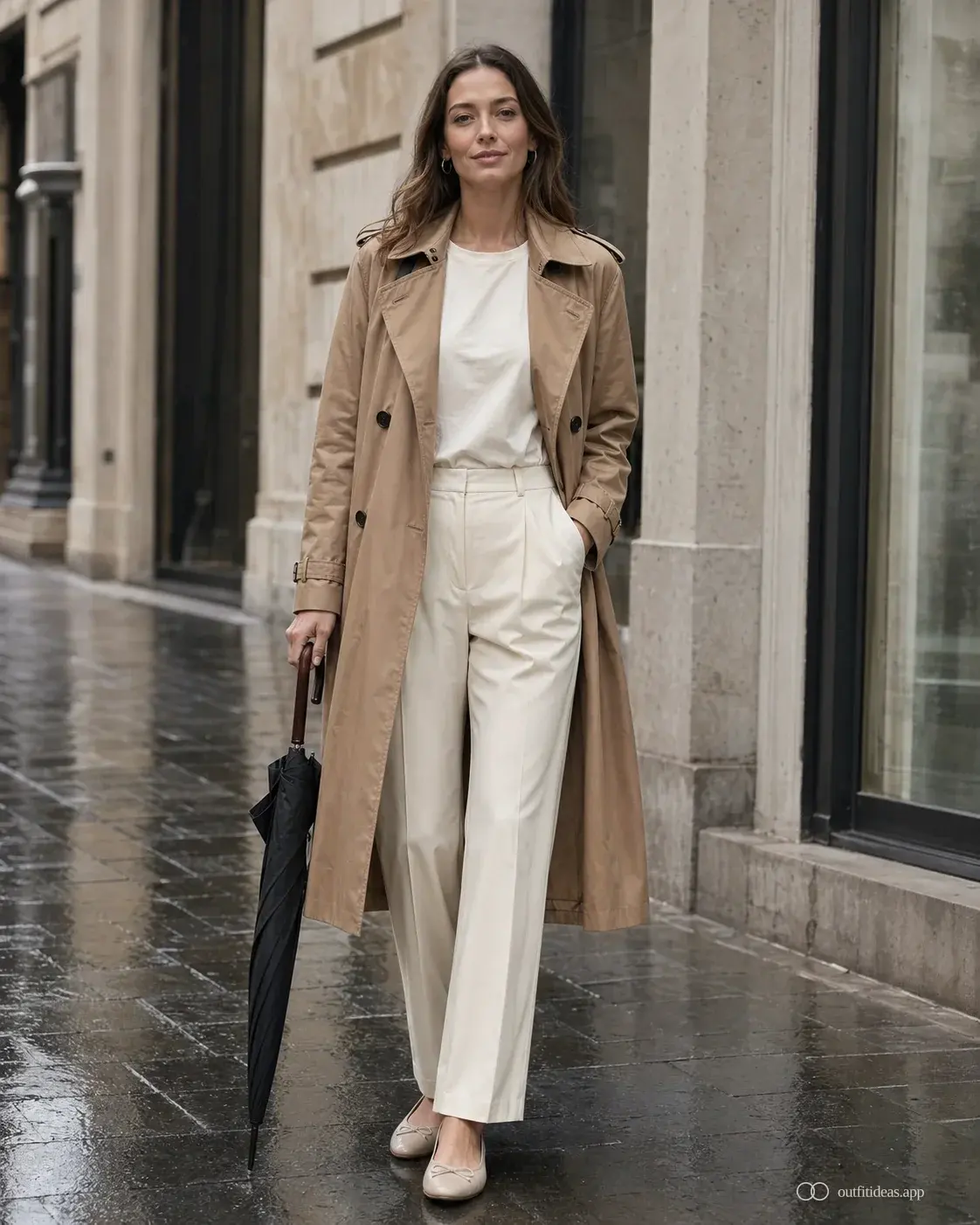 Rainy dayWorkTrenchRainy day work outfit, trench-led capsuleA washable base layer, a flat that survives the puddle and a trench coat doing the styling work — the formula for a rainy day work outfit that still reads polished at 9am.
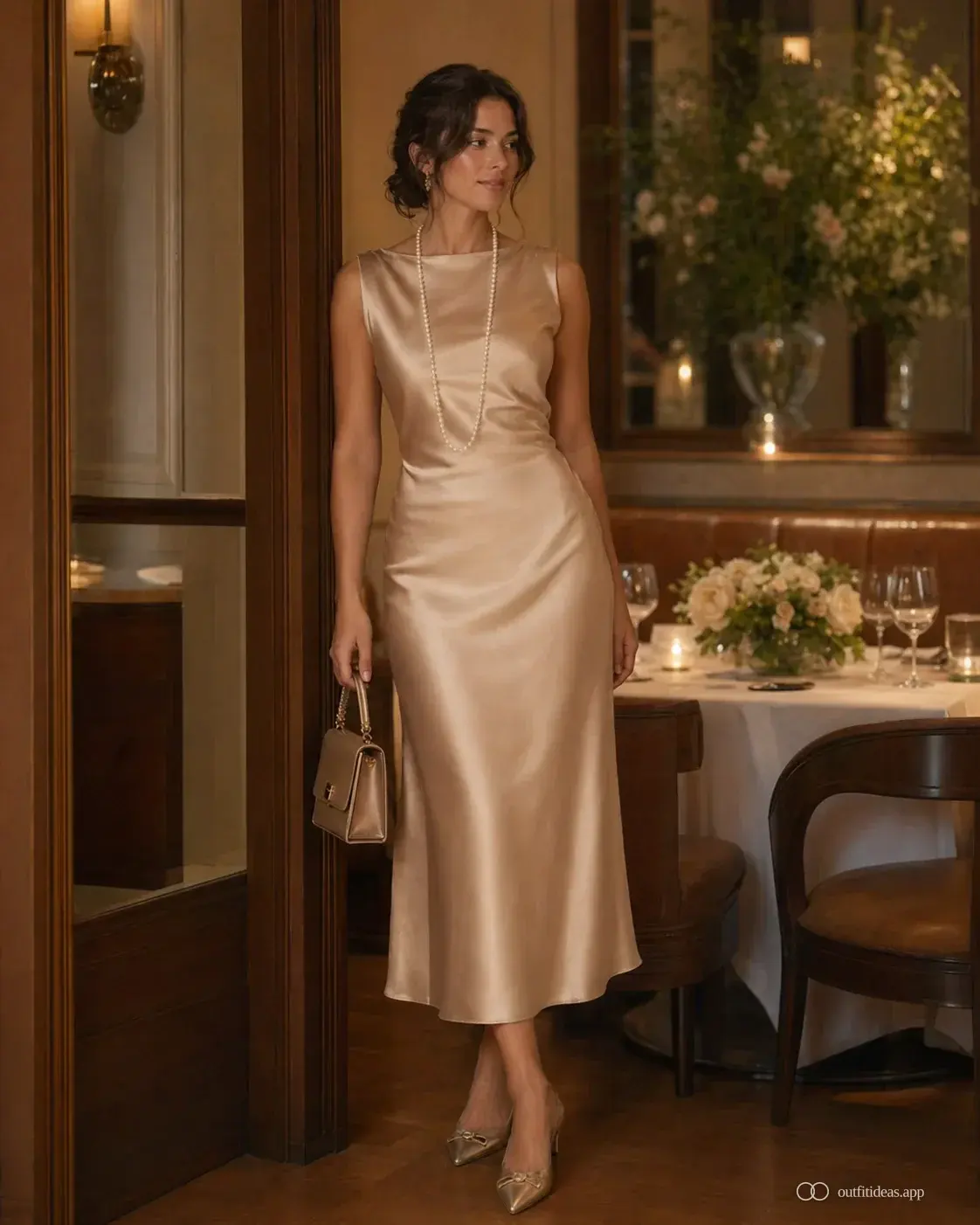 DinnerOld moneySatinOld money dinner outfit in cream satinLow contrast does the heavy lifting. Cream satin, a wrap layer and a single gold accent — quiet enough to feel expensive, warm enough to feel personal.
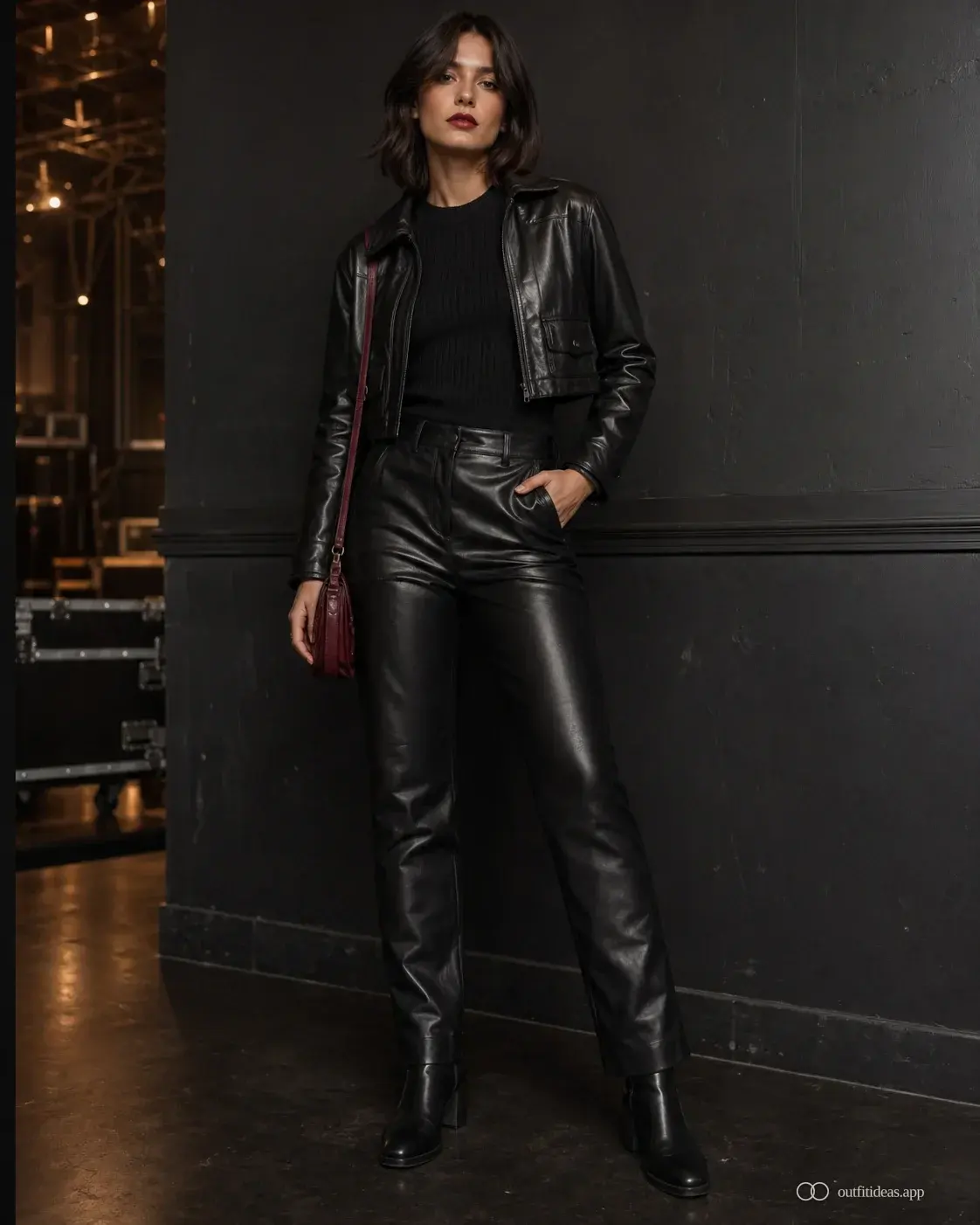 ConcertLeatherStanding venueConcert outfit, leather trousers and block-heel bootLeather catches the stage light. A block-heel boot keeps you on your feet for three encores. The cropped jacket adds shoulder, not bulk.
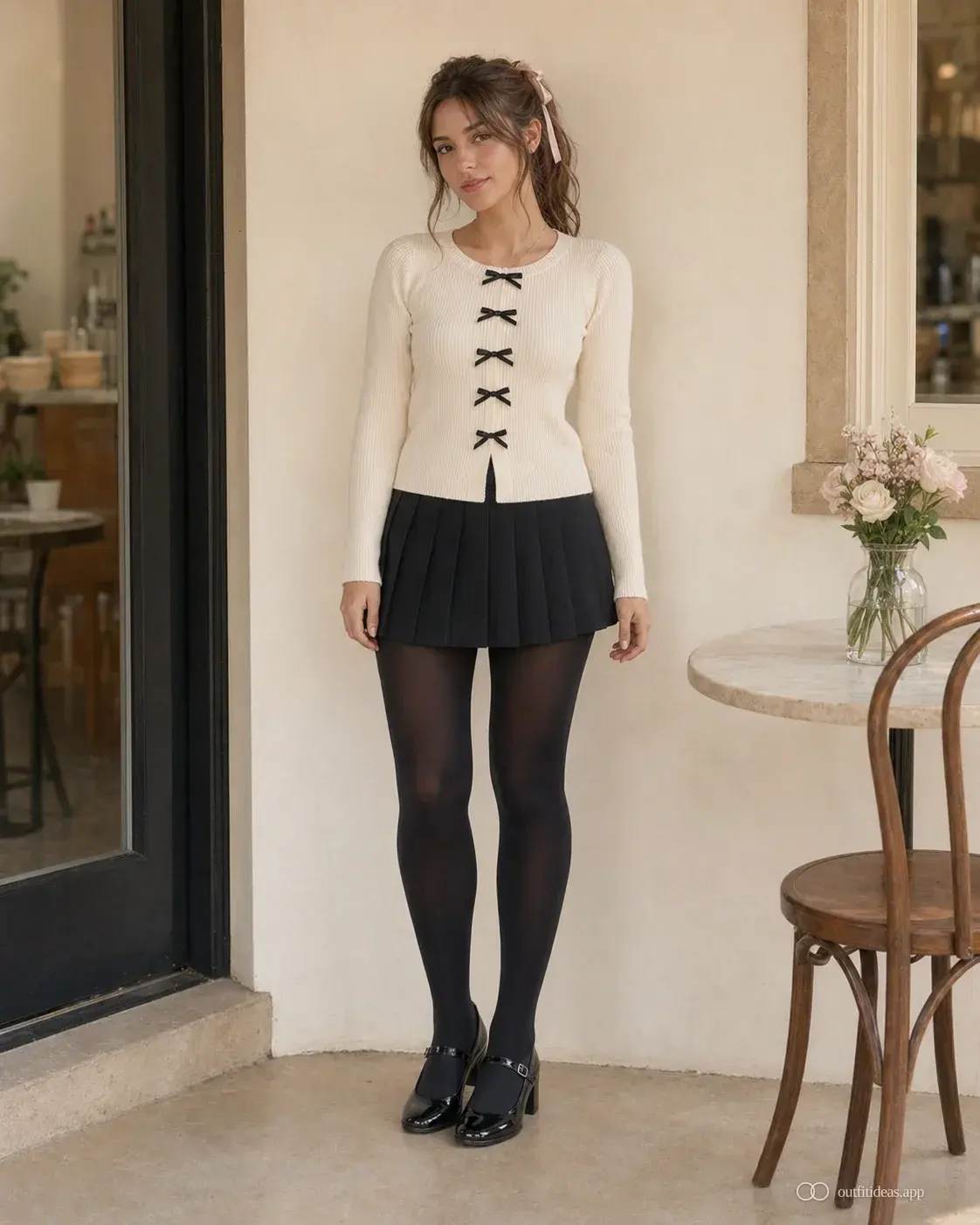 CoquetteDateBow-ledCoquette date, edited downA bow cardigan, pleated skirt, tights and one mary jane heel — soft without letting every detail compete.
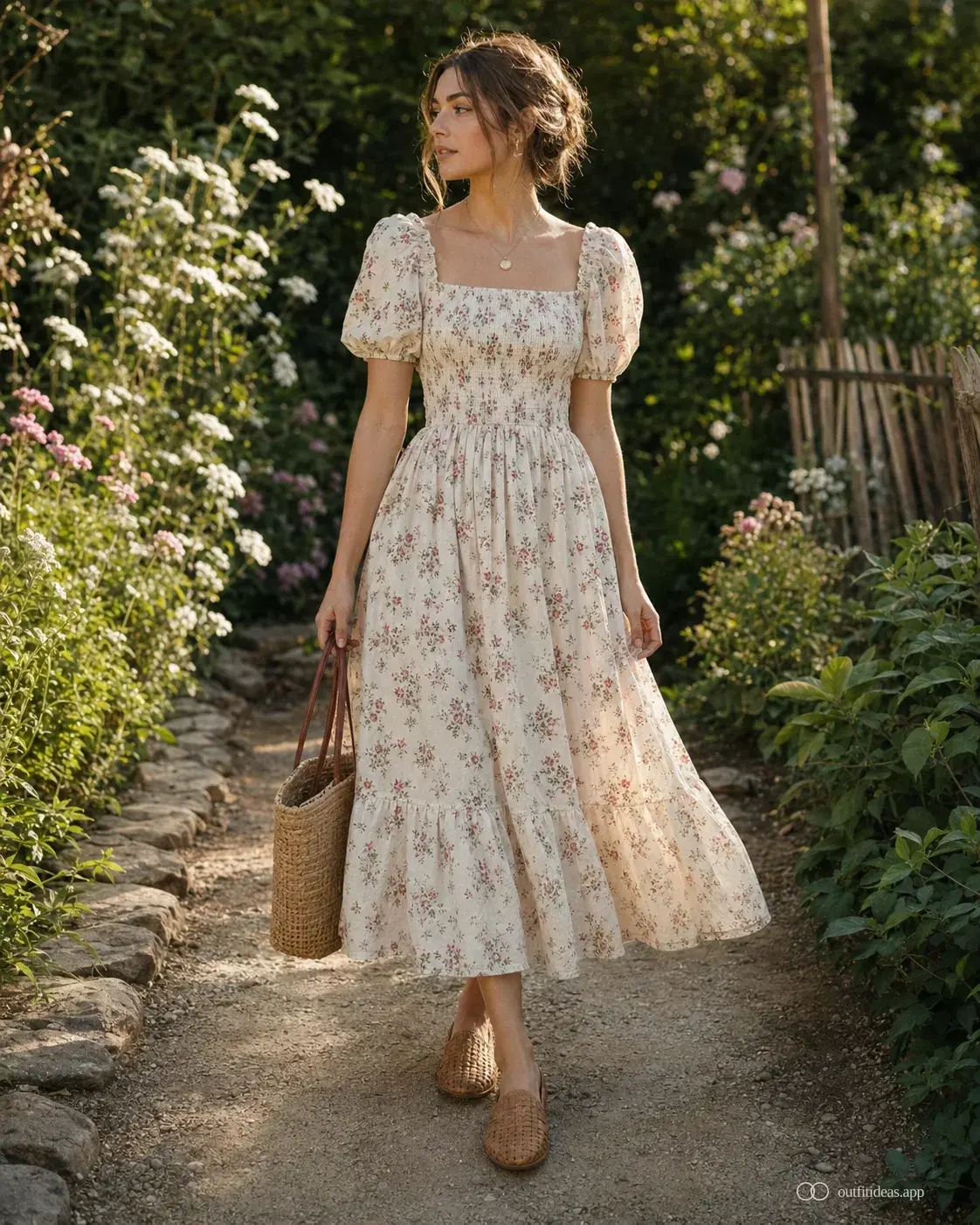 CottagecoreGardenWalkCottagecore for a real walkSmocked floral midi, woven flat and straw bag — romantic enough for the mood, practical enough for the path.
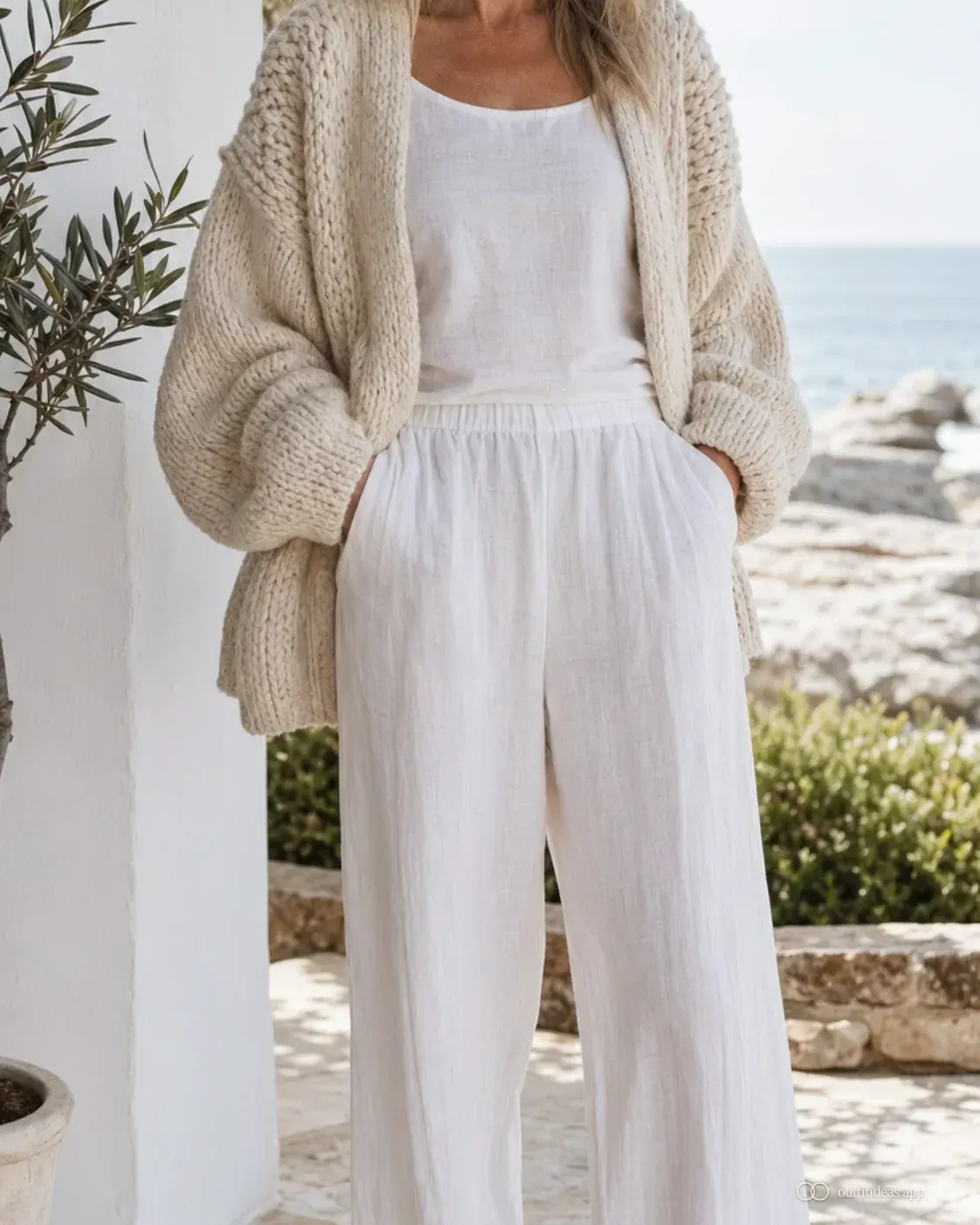 CoastalLinenSummerCoastal grandmother, no costumeWhite linen, chunky cream knit and a woven flat — airy, soft, and still structured enough to leave the patio.
 CuteDateRefinedCute, with a grown-up finishA soft cardigan, an A-line skirt, mary janes — and one structured bag to keep the sweetness from tipping into costume.
Why outfit formulas
An outfit formula is a closed system: a top, a bottom, an outer layer, shoes, and one quiet detail that ties them together. Read the outfit formula once and it tells you what to wear. Read it twice and it tells you why the proportion holds. Every outfit formula on this page comes from a real scene file — a wedding guest, a Sunday brunch, a winter office day — so the picture is not a moodboard. It is the answer to a question someone actually asked.
What separates an outfit formula from a saved Pinterest board is the breakdown. We name every piece. We point at the line each one draws on the body. We say which shoe finishes the silhouette and which bag deflates it. When the proportion math is on the page, you stop guessing in front of the mirror — and the next outfit formula reads even faster, because you already trust the structure.
Use the outfit formulas the way an editor uses a styling sheet: pick the closest scene to your day, scan the breakdown, then swap toward your closet. A black blazer instead of camel. A loafer instead of the heeled mule. An outfit formula is built to survive substitutions, because the underlying proportion logic — column lines, calf-skimming hems, eye-level color — does not care which exact piece carries it.
If you are shopping, an outfit formula is also a buy list with reasons. The formula tells you which one piece does the heavy lifting (usually the trouser or the dress); the rest can come from what you already own. That is why the read flow goes pieces → proportion → scene → swap. By the time you reach the swap notes, you have stopped chasing a hero item and started designing one outfit formula you will keep wearing.
Scene-first, outfit formula second
Start with a scene when you know where you are going. Open an outfit formula when you want to understand why a specific look holds together — and which piece you can swap without breaking it.
01
Top, bottom, outer layer, shoes and one quiet detail are separated so each piece can be swapped on its own.
02
Each piece explains the line it draws on the body — calf-skimming, eye-level color, the column.
03
The same outfit formula can move from office to dinner, commute to weekend, with one piece changed.
04
Use what you already own before shopping; the formula survives because the proportion logic does not care about brand.